Deals Advice
neutralEarly in cycle — full price expected

Early in cycle — full price expected
| AIB Card | Boost Clock | Cooling | TDP | Best For |
|---|---|---|---|---|
| Founders Edition | 2512 MHz | Dual-fan flow-through | 250W | Compact ITX/mATX builds |
| ASUS Dual OC | 2527 MHz | Dual-fan | 250W | Quiet, affordable AIB option |
The NVIDIA GeForce RTX 5070 is Blackwell's high-end sweet spot — 12GB of GDDR7, DLSS 4, and 250W TDP at $549. NVIDIA claims 'RTX 4090 performance' in rasterization, making it the most disruptive card in the lineup for 1440p and entry 4K gaming.
NVIDIA's most disruptive price-to-performance ratio this generation — a generational leap accessible to mainstream budgets.
Lower power draw than the RTX 4070 Super it replaces, while delivering dramatically more performance.
Full Blackwell AI features including multi-frame generation — exclusive to RTX 5000 series.
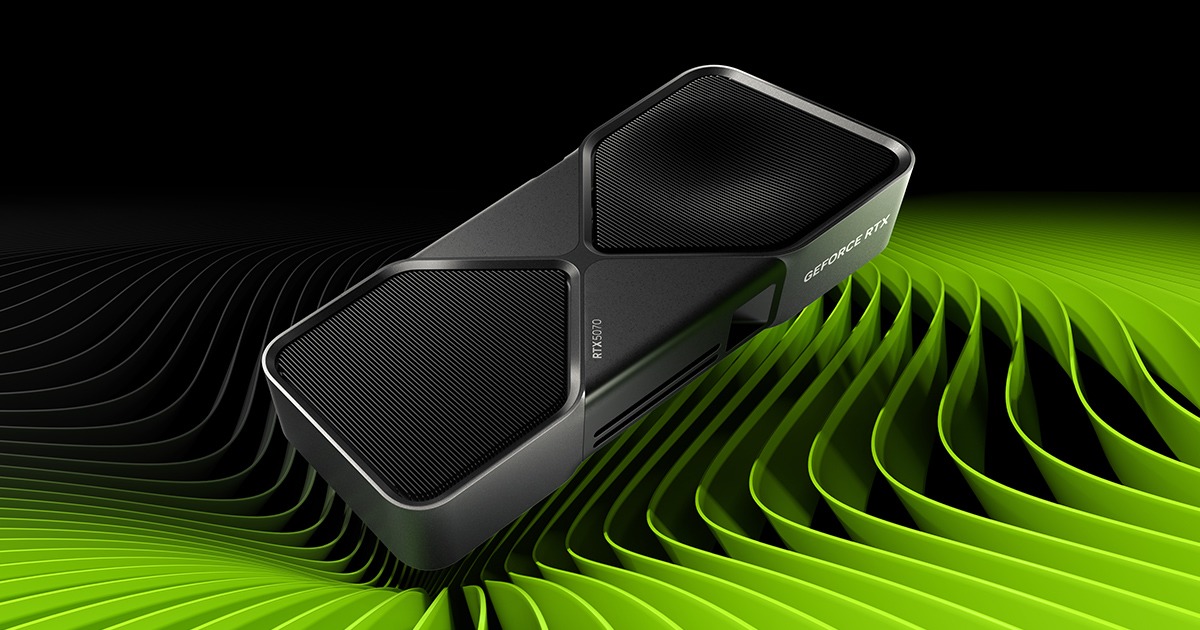
1440p gamers who want near-flagship performance at a fraction of the flagship price, and entry-level 4K gamers.
For 1440p gaming, 12GB is comfortable. At 4K with ultra textures, some titles may push close to the limit. If 4K longevity is your priority, consider the 16GB RTX 5070 Ti.
The RTX 5070 has DLSS 4, better ray tracing, and CUDA for AI workloads. The RX 9070 XT offers 16GB VRAM and competitive rasterization at a similar price. If you rely on NVIDIA-specific features (DLSS, CUDA, NVENC), choose the 5070. For pure rasterization and VRAM headroom, the 9070 XT is compelling.
Launched March 2025, it's at the very start of its cycle. Excellent time to buy.
If buying new, absolutely — the 5070 is significantly faster with DLSS 4. If you already own a 4070 Super, the upgrade is meaningful but not transformative at 1440p.
The Founders Edition uses a compact dual-fan design. Most small form factor cases with GPU support up to 300mm will accommodate it.